
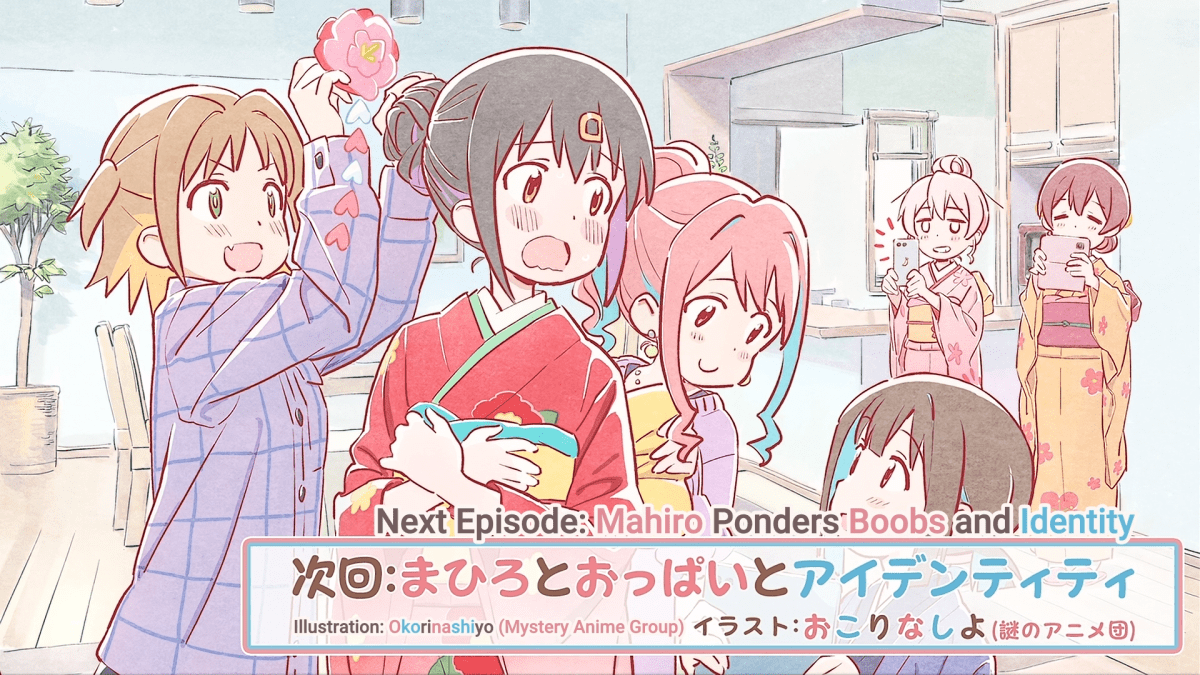
(I wanted to make a very high effort post for this, but I’m realising that this is going to keep it in the drafts forever so here have a rough draft of a part 1 of a review of Onimai)
Today I want to write a review of one of my favourite manga and anime right now. お兄ちゃんはおしまい, known in the west as either Big Brother is Done For, or Onimai: I’m now your Sister.
Onimai is one of those shows where people will tell you “Oh I haven’t seen it, but I’ve seen porn of it”
Well certain kind of people. The cool people.
Let’s start with the premise: Mahiro is a hikikomori, he’s in his early twenties. He uses the term 自宅警備 for himself. A home caretaker. He takes care of the home, which mostly means sitting in his room in the dark playing videogames, reading erotic manga, and watching anime. Many such cases.
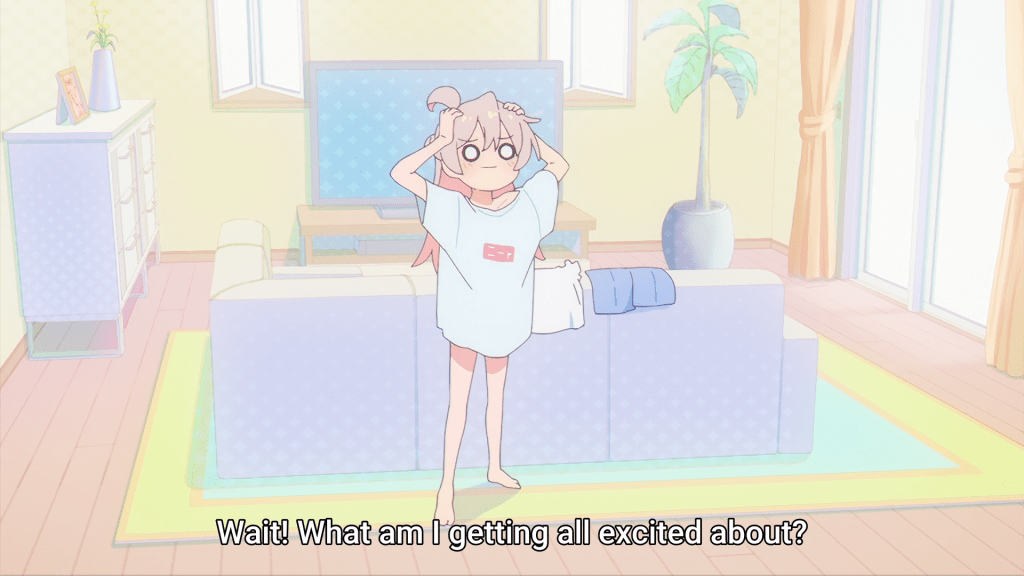
His sister, Mihari, is a university student. She’s younger than Mahiro and would normally be in high school (whereas Mahiro is of the age to either be in university or a fresh graduate but instead he’s a NEET as his favourite T-Shirt Says). Mihari, a bit fed up with this behaviour, a bit out of care and compassion, and a bit as a scientific research project, decides she’s going to take it as a personal quest to rehabilitate her big brother. How does she do this?
Why by drugging Mahiro in secret with a medicine that turns you into a girl. A middle school girl at that.
Yes Onimai is a raunchy sex change manga of the kind many a trans girl has read in her time. I’ve never been that into force femme as a trope, my interest run in a slightly different direction, so I don’t know how many of them feature age regression alongside simply genderchanging. Onimai has both in healthy amounts.
But I’m not writing about onimai because it’s a sexy raunchy rompy sex change manga, I’m writing about it because it’s a manga that explores the effects and treatments of severe chronic undersocialisation. Which is another thing trans girls know all too well.
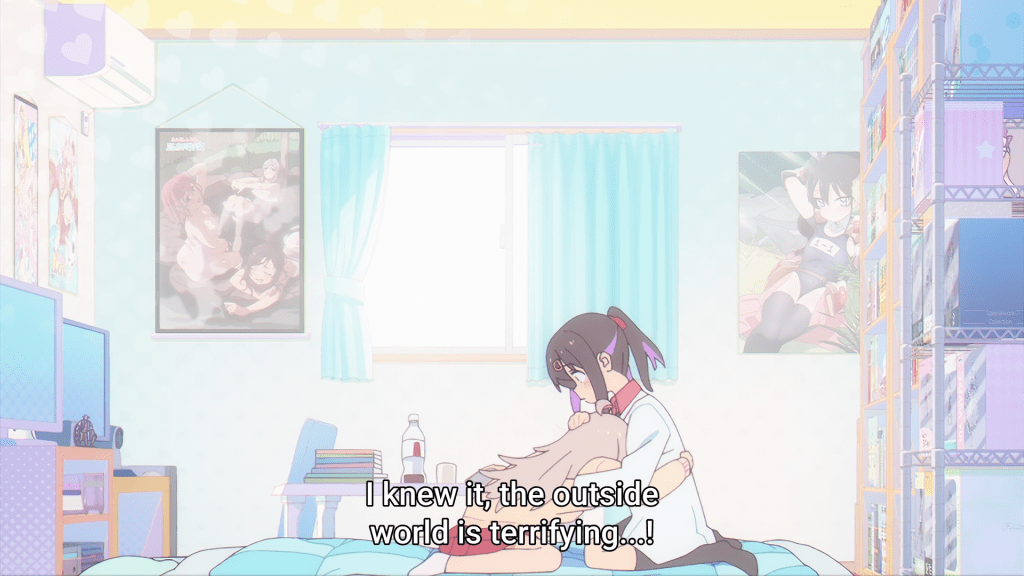
I have a fascination with hikikomori, as a person who cannot stay home to save my life. A number of my internet friends fit the bill better, whether because of disability or autism or personal preference. A lot of them deal with many challenges, but a lot of them are also on the whole, healthier than Mahiro appears to be at first. In 2025, staying home is not necessarily an isolating experience, when you can have friends and community online. And different people have different social needs.
Mahiro does have debilitating agoraphobia, as shown when, throughout the series, she’s eventually coaxed to going out more and reintegrating into the world.
Because what Mihari has given Mahiro, most of all is a second chance. To set right what once went wrong.
Onimai is a transgender narrative which is not something that can be said about every gender bender narrative.
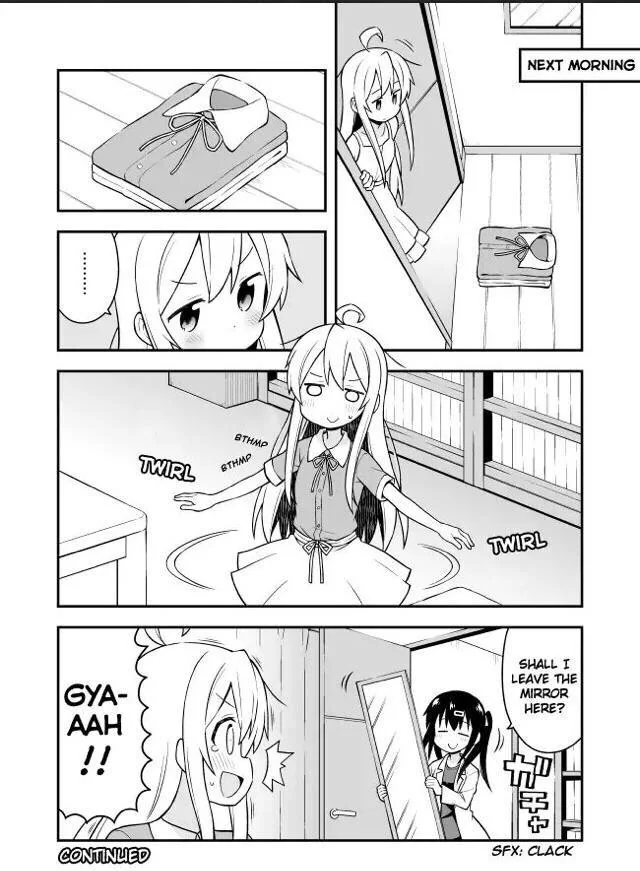
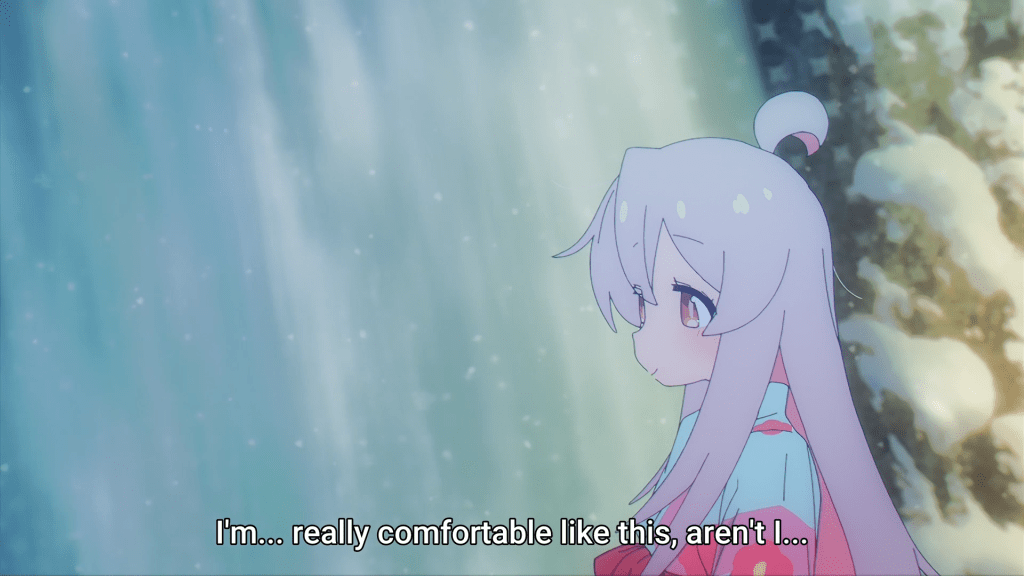
From the little moments where Mahiro catches herself in the mirror and smiles a shy smile. From trans girl standbys like making skirt go spinny. Mahiro slowly, hesitantly and with some performative hesitation, embarks on learning how to socialise and interact with the world, mostly from scratch, as a girl.
This is something I’ve experienced and a lot of trans girls have experienced. Without the benefit of an age regression miracle drug, we instead have to go through our social reeducation in our communities. Lacking a school to make mistakes in we make mistakes in our jobs, in our hobby commiunities, and of course online.
(there will be a part 2 of this post where I will go into a bit more detail and also discuss my favourite character Nayuta, Mahiro’s autistic friend who knows her secret)

 Transfaeries